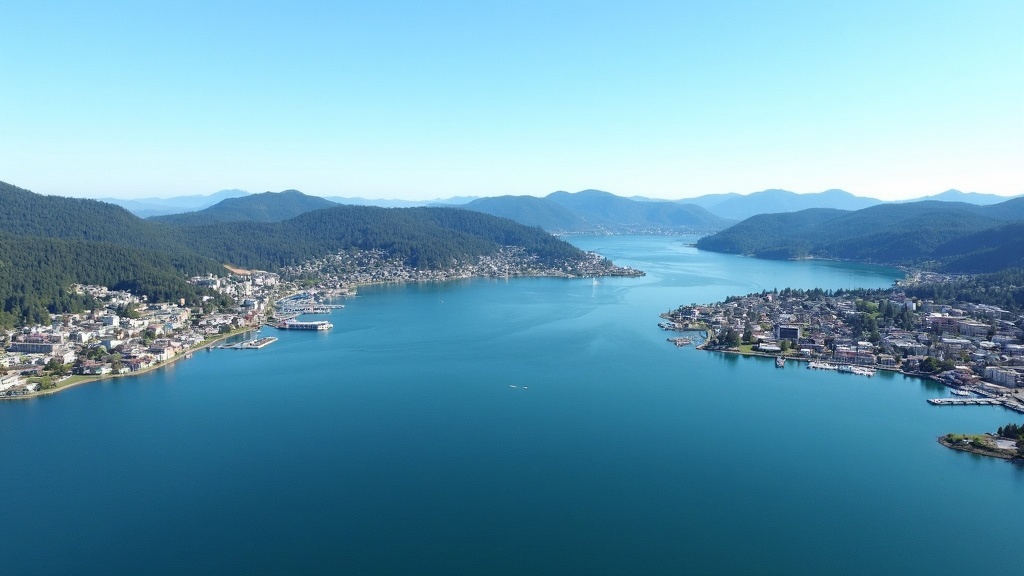
An honest, neighborhood-by-neighborhood look at mobile coverage in Bellingham. Where the big carriers work, where they fail, and how a community-owned network is filling the gaps.
Mobile coverage in Bellingham is one of those topics nobody talks about until they hit a dead spot. You sign up for service from one of the big carriers, you assume it will work everywhere, and then one day you are sitting in your apartment in the South Hill trying to make a call and nothing connects. Or you are driving along Chuckanut and your maps app freezes. Or you are at Boulevard Park trying to share a photo and the upload spins forever.
This guide is an honest look at where mobile service actually works in Bellingham, neighborhood by neighborhood, carrier by carrier. We will cover the biggest dead spots, the real differences between Verizon, T-Mobile, and AT&T in Whatcom County, and how a community-owned network is starting to fill the gaps the big carriers have ignored. If you live here, work here, or are thinking about moving here, this is the practical information you need to make a smart decision about your phone plan.
Why Is Mobile Coverage in Bellingham Inconsistent?
Three factors make Bellingham coverage tricky: the hilly terrain between Bellingham Bay and Lake Whatcom creates signal shadows, the dense Pacific Northwest tree canopy absorbs wireless signal, and the major carriers underinvest in Whatcom County compared to Seattle. Bellingham looks like an easy place to cover. It is a midsize city, the population is concentrated in a relatively small area, and the geography is mostly forgiving. From the outside, you would expect every carrier to have rock solid service everywhere. The reality is messier.
The first reason is geography. Bellingham sits between Bellingham Bay to the west and a wall of hills and forest to the east. Sehome Hill, the South Hill, and the long ridge running up toward Lake Whatcom all create signal shadows. A cell tower a few miles away might cover the airport perfectly while leaving entire blocks of the South Hill in a coverage hole.
The second reason is the trees. Bellingham is famously green, and the mature Douglas fir and western red cedar canopy is dense enough in many neighborhoods to soak up wireless signal in ways that flat, treeless cities never deal with. Coverage maps published by the big carriers do not account for this. They show you the theoretical signal level at the property line, not what your phone actually picks up inside your house.
The third reason is investment. Bellingham is not a top priority for the major carriers. Seattle gets the new towers first. Bellevue gets the upgrades first. By the time Whatcom County is on the list, the budget has already been spent. The result is a coverage map that looks fine on paper and frustrating in practice.
Which Carrier Has the Best Coverage in Bellingham?
Verizon has the broadest coverage footprint in Whatcom County, T-Mobile has the fastest 5G speeds in central Bellingham, and AT&T sits in the middle. Here is the honest, on the ground assessment of how the major carriers actually perform in Bellingham as of 2026. This is based on user reports, real world usage, and public coverage data, not the marketing maps.
Verizon
Verizon has the broadest historical coverage footprint in Whatcom County and is generally the most reliable choice for people who need service in outlying areas like Lake Whatcom Boulevard, Mount Baker Highway, or the islands. Inside Bellingham proper, Verizon is solid in most neighborhoods but has weak spots on the South Hill and some pockets of Sehome.
The downside of Verizon is the price. Their plans run $50 to $90 per month for unlimited service, and they are the most expensive carrier in town. If you are on a budget, paying for the marginal extra coverage may not be worth it.
T-Mobile
T-Mobile has the strongest 5G presence in Bellingham. Their tower investment over the past three years has improved coverage significantly, especially in downtown, Fairhaven, and the Cordata area. If you want the fastest mobile data speeds in Bellingham, T-Mobile is usually the answer.
The weakness is consistency. T-Mobile coverage is great where it exists and nonexistent where it does not. The Lake Whatcom area is unreliable. The trail systems on Sehome Hill have gaps. Drive ten minutes outside the city and you may find yourself dropping to slower service or losing signal entirely.
AT&T
AT&T sits in the middle. Coverage in Bellingham proper is generally workable, though not as fast as T-Mobile and not as broad as Verizon in outlying areas. Pricing is similar to Verizon, which makes them a hard sell unless you have a corporate plan or a family bundle that locks you in.
The Honest Comparison
| Carrier | Strengths | Weaknesses | Approx Monthly Cost |
|---|---|---|---|
| Verizon | Broadest rural coverage, most reliable in outlying areas | Most expensive, weak on South Hill | $50 to $90 |
| T-Mobile | Fastest 5G in Bellingham, strong downtown | Drops off quickly outside city, weak rural | $40 to $85 |
| AT&T | Balanced, decent everywhere | Not the best at anything, expensive | $50 to $90 |
| World Mobile | Lowest cost, growing local network | Newer to the area, coverage still expanding | $15 to $55 |
How Is Mobile Coverage in Each Bellingham Neighborhood?
Coverage varies significantly by neighborhood due to elevation, tree density, and proximity to cell towers. Downtown and Cordata have the strongest coverage, while the South Hill and upper Sehome have the most dead spots. Here is the rundown.
Downtown Bellingham
Downtown is the strongest coverage area in the city for all major carriers. T-Mobile leads on speed, Verizon and AT&T are reliable for calls and texts, and most users have no complaints. If you live or work between Holly Street and Maple, between Cornwall and State, you should not have coverage problems with any major provider.
The exception is inside the older brick buildings. The thick walls of the historic downtown buildings block some signal, especially on lower floors and in basements. If your office is in a basement-level space along Railroad Avenue, expect weaker indoor coverage regardless of carrier.
Fairhaven
Fairhaven gets generally good coverage, with T-Mobile and Verizon both performing well. The challenge in Fairhaven is the elevation changes. As you move from Padden Creek up the hill toward 16th Street, signal strength can vary block to block. T-Mobile is currently the most consistent option in Fairhaven proper.
South Hill
South Hill is one of the trickier neighborhoods in Bellingham. The combination of elevation, dense tree cover, and distance from the main downtown towers creates pockets where service is spotty. Verizon tends to be the most reliable, but even Verizon has streets where indoor coverage is weak.
If you are looking at a rental on the South Hill, ask the current tenants about their cell service before signing. This is one of the most common surprises new Bellingham residents encounter.
Sehome Neighborhood
Sehome is mixed. The lower part of the neighborhood near the WWU campus has solid coverage from all carriers. The upper part of the neighborhood, especially the streets that climb toward Sehome Hill Arboretum, has the same elevation and tree problems as the South Hill. T-Mobile is generally the best option here, with Verizon as a backup.
York and Lettered Streets
The York neighborhood and the streets named after letters near downtown have good coverage. T-Mobile and Verizon both work well. This is one of the easier parts of town for mobile service.
Birchwood
Birchwood, in the north of the city, gets reasonable coverage from all carriers. T-Mobile has been improving their footprint here. Verizon is steady. The further north you go toward the Bellis Fair area, the better coverage gets across all networks.
Cordata and the North End
Cordata has been a recent investment area for T-Mobile, and 5G speeds there are now competitive with downtown. Verizon and AT&T are also solid. If you are choosing a new place to live and mobile coverage is a major factor, the Cordata area is one of the safest bets in Bellingham.
Lake Whatcom and the Foothills
Once you head east toward Lake Whatcom or up Mount Baker Highway, all the major carriers start to weaken. Verizon is the most reliable in these areas but still has dead spots. T-Mobile drops off quickly outside the city. AT&T is in the middle.
If you live anywhere along Lake Whatcom Boulevard or out toward Sudden Valley, expect inconsistent service from all major providers. This is one of the gaps that newer networks like World Mobile are working to address.

Where Are the Worst Cell Phone Dead Spots in Bellingham?
Sehome Hill Arboretum, Lake Padden trails, Chuckanut Drive, and Mount Baker Highway all have significant dead zones with every major carrier. There are several spots in and around Bellingham where mobile coverage is genuinely bad with all the major carriers. If you spend time in any of these places, you should know what you are dealing with.
Sehome Hill Arboretum and Trail Network
The Sehome Hill trails are a beloved part of Bellingham, but mobile coverage on the trails ranges from spotty to nonexistent. If you go hiking up there, do not count on being able to make a call if something goes wrong. Download offline maps before you go.
Padden Lake and the Padden Trail System
Lake Padden is similar. The lake itself has weak coverage, and the surrounding trails have dead zones. Verizon is your best bet, but expect to be unreachable for stretches.
Chuckanut Drive
Chuckanut Drive is one of the most beautiful drives in Washington, and one of the worst for mobile coverage. The combination of curving roads, dense forest, and distance from population centers means service is unreliable for the entire stretch from Fairhaven to Bow. If you break down on Chuckanut, do not assume you can call for help.
Mount Baker Highway
The same applies to Mount Baker Highway as you head east from Bellingham. Service is decent through Maple Falls, weakens quickly past Glacier, and is essentially nonexistent in the Mount Baker area itself. This matters if you are heading up to ski or hike.
The San Juan Ferries
If you ride the ferry from Bellingham or Anacortes to the San Juan Islands, expect to lose service for portions of the trip. Coverage on Lopez, Orcas, and San Juan islands themselves is patchy. Some carriers do better than others, but none are great.
What Is a Community-Owned Mobile Network and How Does It Improve Bellingham Coverage?
A community-owned mobile network uses small wireless radios hosted on local rooftops and buildings instead of relying solely on large corporate cell towers. This lets the network fill coverage gaps block by block. Here is what is starting to change in Bellingham. World Mobile is a real, licensed mobile carrier in the United States that operates differently from the big three. Instead of a few large cell towers owned by the company, the network is built from many smaller wireless radios hosted by local property owners. Each radio covers its immediate area, and together they form a community-owned network that grows organically as more locations come online.
This approach has some real advantages for a place like Bellingham. The network can fill the small geographic gaps between the major carrier towers, because individual property owners can put a radio in exactly the spot where coverage is weak. A radio on a rooftop in the South Hill, for example, can serve subscribers in a block that the big carriers struggle to cover. A radio in Fairhaven can fill in a coverage gap that has frustrated locals for years.
The pricing is also significantly better. World Mobile plans start at $15 per month for a starter plan with unlimited talk and text plus a generous data allotment, and run up to $55 per month for the unlimited+ plan. For a full breakdown of how these prices compare, see our guide to affordable phone plans in Bellingham. That is roughly half the cost of an equivalent plan from Verizon or AT&T. The plans include features like a built-in VPN, which the big carriers do not offer.
The network is in active growth phase in Bellingham right now. Coverage is expanding monthly as new host locations come online. If you want the lowest cost mobile service in town, and you want to support a network that is being built by your neighbors, this is worth a look.
Choosing the Right Plan for Your Situation
Coverage is not the only thing that matters when picking a mobile plan, but it is the first filter. Here is a simple decision framework based on where you live and what you need.
You live in central Bellingham (downtown, Fairhaven, York, Sehome lower): You have the most options. T-Mobile gives you the fastest speeds. World Mobile gives you the lowest cost. Verizon gives you the broadest backup coverage if you sometimes need it elsewhere. Pick based on price. If you are a student at WWU or Whatcom Community College, our student phone plans hub has campus specific recommendations.
You live in the South Hill or upper Sehome: Verizon is the safest big carrier choice, but it is expensive. World Mobile has growing coverage in these neighborhoods and is significantly cheaper, but you may want to verify coverage at your specific address first. Most providers offer a way to test before committing.
You live in Cordata or the north end: T-Mobile has the best 5G performance here, World Mobile has solid and improving coverage, and prices are competitive. This is one of the easier parts of Bellingham to get good service in.
You live around Lake Whatcom or in the foothills: Verizon is your best bet for now. World Mobile is expanding into these areas but is not yet the most consistent option. If you frequently travel into the foothills for work or recreation, sticking with Verizon may be worth the cost.
You commute on Chuckanut or Mount Baker Highway: Verizon is the most reliable. No carrier is great in these stretches.
What to Do Before You Switch
If you are thinking about changing carriers, here are the things to do first.
Check Your Actual Usage
Before you pick a plan, look at how much data you actually use. Most people pay for far more data than they consume because they have been trained to fear running out. On iPhone, go to Settings, then Cellular, and look at “Current Period.” On Android, go to Settings, then Network, then Data Usage. You may discover you are paying for 50 GB and using 5.
Verify Coverage at Your Address
Every major carrier has a coverage checker on their website. World Mobile offers the same. Type in your specific address and see what the coverage looks like. Do not rely only on the city-wide map; the granular check at your actual address is much more useful.
Read Recent Local Reviews
Search for your neighborhood plus the carrier name and read what locals are saying. Reddit threads in r/Bellingham often have honest takes about which carriers are working in which neighborhoods. The information is much better than carrier marketing.
Consider an eSIM Trial
Many carriers now offer eSIM trials that let you test their network without committing. This is the fastest way to know if a carrier actually works at your house, your office, and your daily commute. If the trial does not work for you, you have lost nothing.
Think About Hidden Features
Some features really matter and rarely show up in marketing. A built-in VPN is one of them. If you regularly use public Wi-Fi at coffee shops or co-working spaces, having a VPN bundled with your phone plan is worth real money. Standalone VPN services charge $5 to $12 per month; getting one bundled saves that.
The Bigger Picture
Mobile coverage in Bellingham has been the same story for years. The big three carriers compete in the central neighborhoods, do okay in the suburbs, and leave outlying areas underserved. Prices keep going up. Coverage maps keep promising better service than you actually get.
The reason this is starting to change is that the model itself is changing. Networks built by communities, with radios hosted on local rooftops, can fill the gaps that the big carriers have always ignored. They can also offer plans at lower prices because the cost structure is fundamentally different. There is no national branding budget. There are no wholesale handset subsidies. There is just a network and the people who use it.
For Bellingham residents, this means more choice. You no longer have to pick the least bad option from three large companies that have not really competed for your business in years. You can pick the option that actually works in your neighborhood, costs what you want to pay, and is built by people who live where you live.
If that sounds interesting, the place to start is figuring out what plan and network actually fits your daily life. The answer is rarely the one being advertised on a billboard. It is usually whatever you discover after looking at your actual usage, your actual address, and your actual budget.
Frequently Asked Questions
Which carrier has the best coverage in Bellingham overall?
Verizon has the broadest geographic footprint, but T-Mobile has the fastest speeds in central neighborhoods. The "best" depends on where you live, work, and travel.Is World Mobile available everywhere in Bellingham?
World Mobile is in active buildout in Bellingham right now. Coverage is strongest in central neighborhoods and growing monthly. Check coverage at your specific address before committing, the same way you would with any carrier.How much can I really save by switching carriers?
Most Bellingham residents on a major carrier plan save between $20 and $50 per month by switching to a lower cost provider. Over a year, that is $240 to $600 in savings without losing service quality.Will switching carriers affect my phone number?
No. Your number is yours and ports between carriers. The process usually takes a few hours and is handled automatically when you sign up with the new carrier.Do I need a new phone to switch?
Almost certainly not. Most modern unlocked phones work on every major US network. If you bought your phone from Verizon, T-Mobile, or AT&T in the past few years, it can probably switch to any of the others without a problem.What about international travel and roaming?
This varies by carrier. Verizon and T-Mobile have the broadest international roaming deals. World Mobile includes some international features in its plans. If you travel often, ask specifically about roaming before signing up.Why is mobile coverage in the South Hill so unreliable?
A combination of elevation, dense tree cover, and distance from the main downtown towers. Carriers have not invested heavily in fixing this. Smaller, locally hosted radios are starting to address it neighborhood by neighborhood.Is it worth paying extra for the most expensive plan?
For most people, no. The premium plans are designed for heavy data users who want hotspot, premium streaming, and large international allowances. If you do not use those features, you are paying for things you do not need.Ready to Find a Better Plan
If you have been frustrated with your current carrier or are just tired of paying $70 a month for mediocre service, there is a better option for most Bellingham residents. HexyMobile is the local face of World Mobile, building the community-owned network across Bellingham one rooftop at a time. Plans start at $15 per month, the network is real and growing, and the service is built by people who live here.
Browse Bellingham phone plans or learn how the local network is being built.
Ready to switch? Plans start at $15/mo.
Sign Up at HexyMobile